

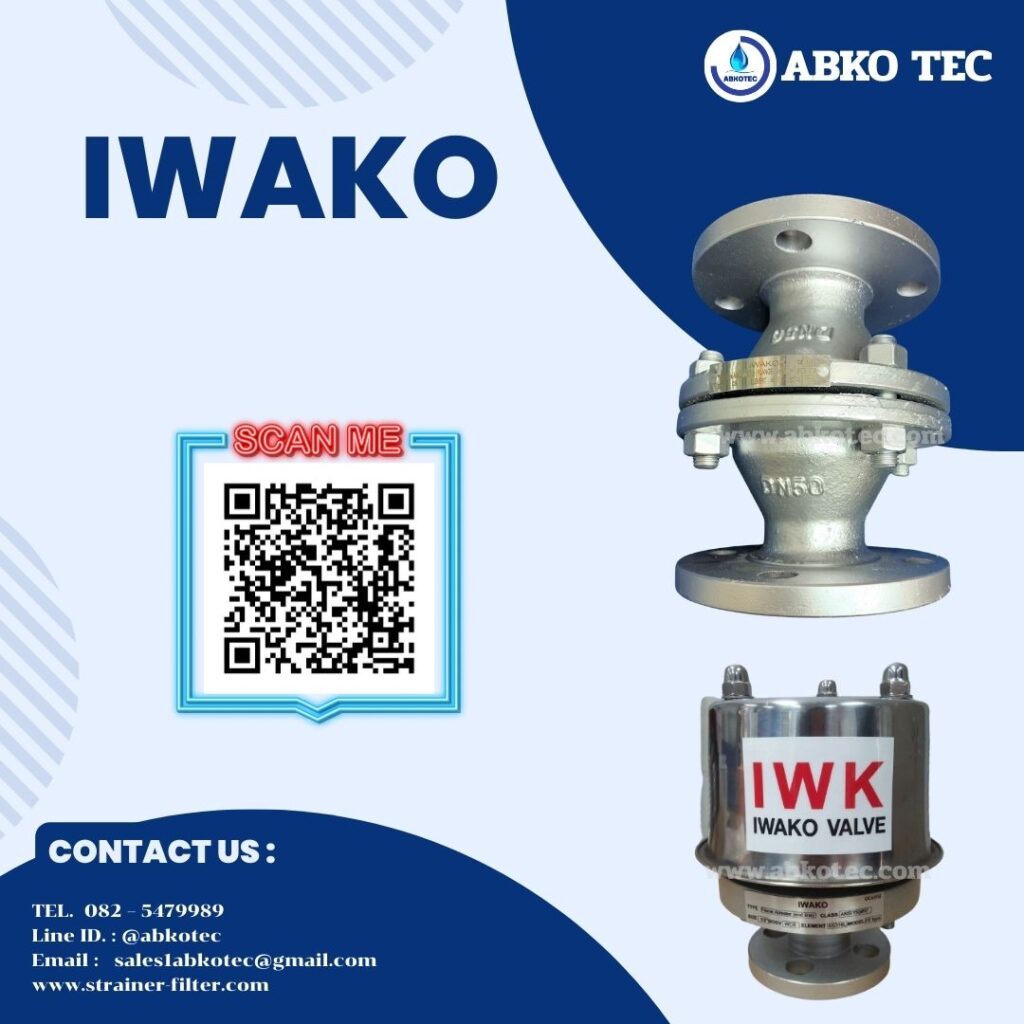
Flame Arrester Difference Between End-of-Line and In-Line | IWAKO
What Is the Difference Between End-of-Line and In-Line Flame Arrester?
In industrial facilities where flammable gases or vapors are handled, preventing flame propagation is one of the most critical aspects of process safety. The device known as a flame arrester plays a central role in this protection. Two main categories are widely used: the End-of-Line Flame Arrester and the In-Line Flame Arrester.
Although they share the same fundamental purpose of stopping flames, their design, function, and application differ significantly. Understanding these differences is essential for engineers, maintenance teams, and decision-makers who must ensure that safety devices are correctly specified and maintained.
What Is an End-of-Line Flame Arrester?
An End-of-Line Flame Arrester is typically mounted at the termination point of a vent line or at the breathing port of a storage tank. Its main task is to prevent external flames from entering the tank or vessel.
Consider a scenario where welding sparks, static discharge, or an external fire occurs near a tank vent. Without a protective barrier, flames could travel into the vapor space of the tank, igniting its contents. The End-of-Line Flame Arrester prevents this by quenching the flame right at the vent outlet.
The core of the device is the flame element, constructed from layers of corrugated stainless-steel ribbon, fine wire mesh, or sintered metal. These narrow channels absorb the heat of the flame and cool it below the re-ignition temperature of the vapor-air mixture, effectively extinguishing the flame.
This type is commonly used for petroleum storage tanks, chemical containers, and systems requiring safe venting to the atmosphere.
What Is an In-Line Flame Arrester?
An In-Line Flame Arrester is installed directly within a pipeline, between two pieces of equipment such as tanks, compressors, mixers, or distribution headers. Unlike the end-of-line design, this device must handle flame propagation that originates and travels inside the piping system.
Combustion within pipelines is more complex than an external ignition. Pressure fluctuations, turbulence, and wave reflections can accelerate the flame front and make it more destructive. For this reason, In-Line Flame Arresters are often built with longer flame paths or multi-layer flame elements, allowing them to absorb more heat and extinguish flames under severe conditions.
These arresters are particularly critical in process pipelines where multiple units are interconnected and the risk of internal ignition must be controlled.
Key Differences Between End-of-Line and In-Line Flame Arresters
Installation Location
End-of-Line devices are fitted at the end of vent lines, stopping flames from entering from the atmosphere. In-Line devices are placed within the piping network, stopping flames that propagate internally.
Protection Mechanism
End-of-Line units protect against external ignition sources, such as sparks or open flames near the vent. In-Line units deal with internal ignition, which can be more severe and unpredictable.
Design Characteristics
End-of-Line arresters are compact and often include weather hoods or insect screens. In-Line arresters are structurally more complex, designed to withstand pressure surges and turbulent flame conditions.
Impact on Flow
End-of-Line units typically do not significantly affect system flow, since they connect directly to the atmosphere. In-Line arresters require careful consideration of pressure drop and flow capacity to avoid system inefficiency.
Materials Used in Flame Arrester Construction
The outer housing of a flame arrester is typically made of stainless steel for corrosion resistance, carbon steel with protective coatings, or nickel alloys for aggressive environments.
The flame element is the heart of the device, designed with high thermal conductivity materials. Corrugated metal strips, fine mesh, or porous sintered metal create extended surface areas and narrow channels to dissipate flame heat effectively.
Seals and gaskets are manufactured from chemically resistant materials such as graphite composites, fluorocarbon polymers, or synthetic elastomers to ensure reliability under varying chemical and thermal conditions.
IWAKO Flame Arresters
IWAKO is a trusted manufacturer of both End-of-Line and In-Line Flame Arresters. The brand offers robust designs tailored for petrochemical plants, refineries, and industrial energy systems. IWAKO products are manufactured with precision-engineered flame elements and high-quality materials, tested against international standards to ensure safety and long-term performance.
FAQ
What are flame arresters made of?
They are usually made of stainless steel, carbon steel, or special alloys, with flame elements constructed from metal mesh or corrugated ribbons.
Where should an End-of-Line Flame Arrester be used?
It is suited for tank vents and outlets that are exposed to the atmosphere.
When should an In-Line Flame Arrester be installed?
It should be used in pipelines connecting different equipment, where flame may propagate internally.
How often should flame arresters be maintained?
They should be inspected and cleaned regularly, particularly in services with heavy vapors, dust, or polymer-forming gases.
Protect your facility with Flame Arresters, End-of-Line Flame Arresters, and In-Line Flame Arresters from IWAKO. Our engineered solutions deliver reliability, safety, and compliance with international standards. Contact us today for expert consultation and a customized quote.
TEL. 082 547 9989
Email : sales1abkotec@gmail.com
Line ID. : @abkotec
Facebook.com/Strainer Filter Industrial
Author Profile
Latest entries
 anodeพฤศจิกายน 5, 2026Magnesium Anode carbon steel tank
 strainer filterพฤศจิกายน 2, 2026Water heat exchanger
 Sight Glass Level Gaugeตุลาคม 29, 2026Brass Oil Level Indicator IWAKO
 strainer filterตุลาคม 26, 2026Basket Strainer Simplex vs Duplex